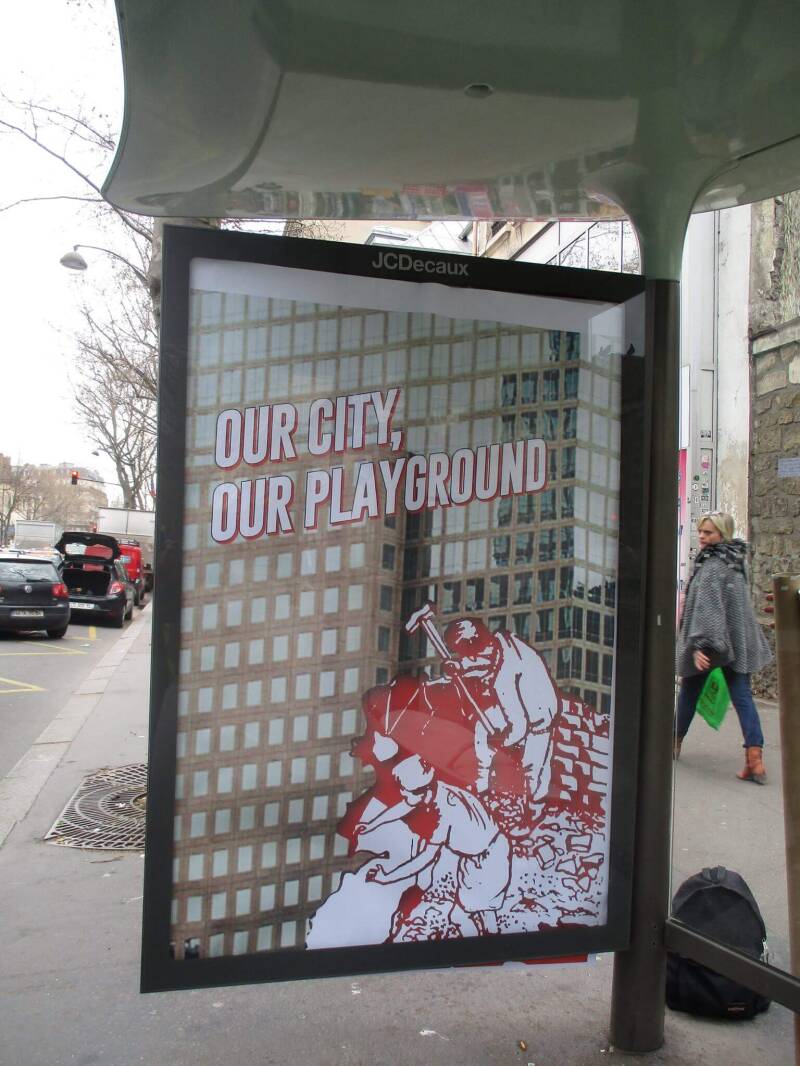
A Call to Reclaim the Streets from the Doctrine of Advertising!
There is something I feel really frustrated about. Because I see it way too often, mostly when I’m walking down the street, scrolling on Instagram or when I’m watching a funny video on YouTube. I am talking about ADVERTISING! There are simply too many ads: trams wrapped in commercials, constant interruptions on television and radio, and pages filled with them in magazines. Almost every interaction I engage with in the outer world contains some sort of ads, sponsor deals or commercial spaces. There are only a few places where you don’t get slammed in the face with ads, for instance; while reading a book, listening to cd’s, meditating, making crafts, joining a jam session, visiting a library, doing sports or spending time in nature. And I strongly believe that the overly presence of ads causes more harm than we like to believe it does.
Feeling unfulfilled
Advertisement gives you the feeling that you are missing something, it plays into your psyche, implying that without purchasing the advertised product you will be less successful and you won’t fit in with the standards set by the commercials. Especially ads that are targeted at women carry this idea with them. Everyday, women see commercials telling them they should get skinnier or use anti-aging products. These products get sold under the slogan #becauseyourworthit, but this gives a false illusion, because you should not have to change or buy something to be worthy – you are also worthy without the products. The body of a woman is presented as an unfinished project and as an object, this intensifies the idea that women are passive beings, instead of social and political beings. With this example I want to show how the things we see around us (un)consciously influence the way we think, act and behave. That’s why I dare to claim that ads are harassments on the human mind.
The public sphere
So now that I’ve outed some of my frustrations and my intense dislike against them, I want to explore possible solutions or ways to handle the constant presence of commercials. In this essay, I mainly want to focus on advertisement in the public spaces. While banning online ads is a monumental task that mostly relies on individual boycotting, ‘boycotting’ the public sphere is impossible. When I speak of the public sphere, I mean everything outside your home. But also, the representation of a city on maps or platforms such as Google maps. These apps have a strong influence on the way you approach a city. Of course they can be really handy to navigate, but they also distract users a lot with ratings and recommendations. This makes our approach to a (new) place commercial. It forces us to move in a certain way, while saving our data in the background. These apps influence the way we navigate through a city, so they also belong to the public sphere in some sense.
Détournement
We are often conditioned to accept the commercialized public sphere as an inevitability, but we should not see our surrounding as unchangeable or get hopeless, instead we can learn from interesting strategies performed earlier in history. If we view advertising as a form of visual 'vandalism' against our shared environment, we could find the moral ground to reclaim these spaces. Guy Debord, a founding member of the Situationist International, explored this in his book The Society of the Spectacle (1967). Expanding on Marx’s theory of alienation, Debord argued that in a consumerist society, we are alienated not just from our labour, but also from the way we spend our free time, because in the consumerist society we spend it mostly by consuming. As he famously wrote: “Everything that was directly lived has moved away into a representation.”
To fight back against this capitalistic regime, Debord proposed Détournement: the political act of hijacking existing cultural imagery, such as billboards, slogans, or editing film material to change their original meaning. By adding layers of critique to advertisements, détournement exposes the underlying ideology and strips the 'Spectacle' of its power, these sort of little acts of rebellion make the absurdity of the ruling system visible.. His ultimate goal was to transform the public sphere from a site of passive consumption back into an arena for play, debate and authentic collective activities, such as making music together. According to Debord we should all strive to be more silly, playful, ridiculous and crazy in order to fight back the rigid, inflexible and financial life that was put on to us.
Resistance
Naomi Klein worked in the tradition of Guy Debord and analysed in her book No Logo (1999) how brands in the 90s tried to sell a lifestyle. They did this with slogans such as ‘Just do it’ and by attaching this to their logo and letting them appear everywhere. Because these lifestyles become overly visible and shoved in your face, she also sees culture jamming as a valid reaction and the best tool for resistance. Klein states that ads are a one-way conversation without dialogue. By editing the picture, you speak back and show that you don’t want to be controlled by the ads.
While Debord and Klein focused on the subversion of images, Henri Lefebvre offered another view in his book ‘The Right to the City’ (1986). Lefebvre argued that the urban environment should not be a commodity managed by capital and advertising, but a social space shaped by the needs and desires of its inhabitants. The citizens should have self-management and transition from passive users into active participants. He states that removing ads is not only an aesthetic choice, but a necessity to change thought paths and create inspiring and creative spaces for the people who live in it. The emphasis in the public area should shift from an ‘exchange value’ to an ‘use value’. He analysed the way cities changed into commodities and a way to change this is reclaiming the streets.
Shocking and moving art
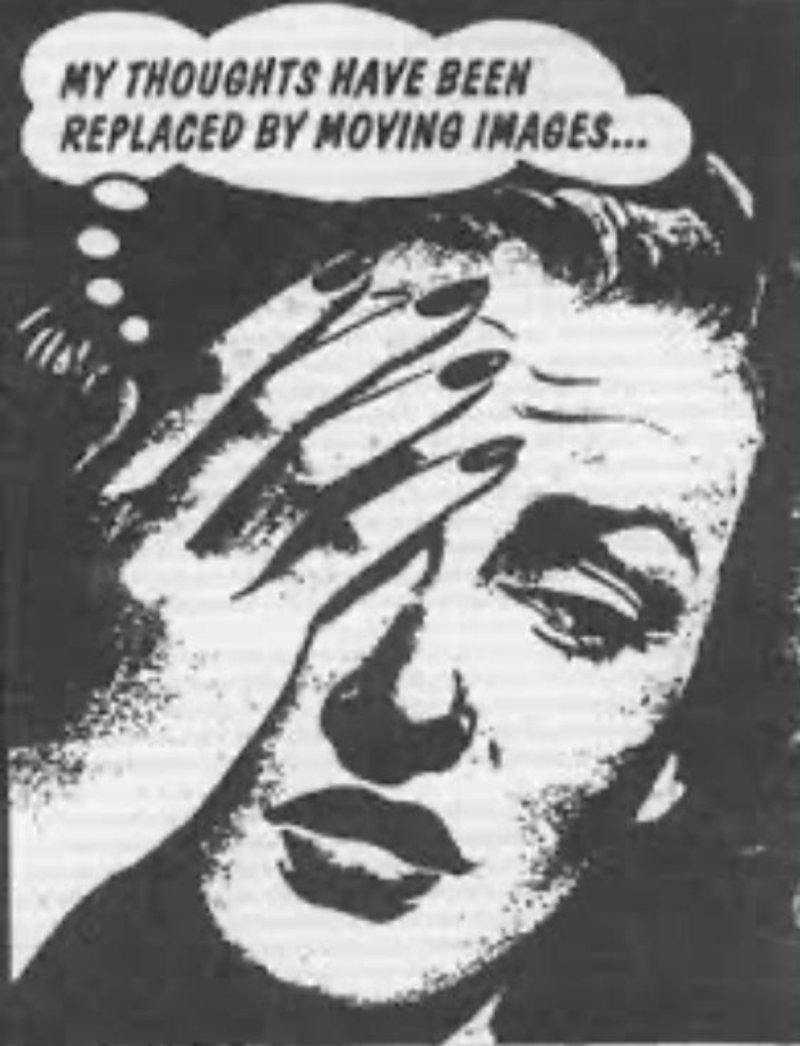
A what more modern reactions to hyper-capitalism and the large presence of advertisement could be the views of Santiago Zabala, who wrote the book ‘Only art can save us: Aesthetics and the absents of Emergency’ (2017). Zabala argues that ads and the presence of mass media in our modern times have caused us to be constantly distracted from the emergencies that are happening such as the climate crisis. The big companies try to comfort us with more products, so we stay calm and quiet. And while consuming takes over most of our time, it’s harder to think critically or come up with our own ideas. His proposal to get out of this passive state is making and viewing art that alarms us, shocks us and wakes us up. An example of an alarming art installation can be found in actions of Extinction Rebellion, who portray people sinking in the ocean because of the evolving climate crisis. They alarm us to wake up, to get out of the consuming day to day life.
I think the ideas of Zabala are convincing because the art he proposes as wake up calls are mostly performances, and performances are always done by embodied artists. While pictures may always create a distance, even when changing the meaning of them, a person standing in front you and portraying feelings you first felt alienated to, can give you a feeling of resonance, and this is what we need. Because of all the images we are surrounded with, we have to process way to many information, but with human interaction you can really feel something.
Performance art
Another example of messing with the status quo and by some thought as shocking art is the performance art trio, who in 2007 changed their name into Janez Janša, the name of the Slovenian right-wing president at the time. With this act they wanted to show how many meaning and power can be related to a name or a brand. But what happens with that power when more people have that name and it becomes a public property? With this act the artists like to show that nowadays a name of a politician can be turned into a brand, by taking this name they rebrand it, similar to culture jamming but then with more real and bureaucratic consequences. By multiplying the name they also show the process of mass culture, if everything can be a copy, the original name holder loses its meaning. The artists still go by this name till this day, they made it into a lifelong project. This performance shows that we attach a lot of meaning and power onto packaging and the brand that’s sticked to it, ads reinforce this and let us care more about the brand then the real substance behind the packaging.
Ridiculization
Some other inspiring performance artist I found while strolling through the modern museum in Barcelona is Guillermo Gómez Peña, a Mexican-American artist who wants to show with his work that not only products get advertised but also people and their cultural identity can be commodified. Gómez Peña tries to show this phenomena in his iconic performance “The couple in the Cage” (1992, with Coco Fusco). In this performance he presents himself as an ‘undiscovered’ indigenous person in a golden cage across malls in big cities, and when you pay them money they will do a little dance or watch television, the “Other” is commodified and sold back to the public in a neutral or recognizable way.
Gómez Peña wants to make us aware of the medium ads are using. Ads try to show us a clean and shining world, but Gómez Peña wants to show the other messy, dirty and unjust side of the commercial world. That’s why in his work he likes to mix newer and older technology, he dresses up as a Shaman wearing a virtual reality headset and holding a bottle of tequila. He does everything to make fun of the ruling (American) order.
So possible ways to attack ads could be culture jamming with making art that shows the hidden message in the ads and doing live performances to make people feel something again.
These are all great ideas, but I would like to admit that it’s quite hard to find a clear example of how an advertising-free world could look like on a bigger scale. And because most people are unaware of the problem or too lazy to change it, it feels like a really big task. But there are also many cool examples of groups who tried to fight back the system, such as the Guerilla Girls and Brandalism. But because capitalism commodifies everything, there is the risk that the anti-advertising movements gets absorbed by the system they critique, where radical symbols are stripped of their meaning and sold back to us as just another ‘rebellious’ aesthetic, such as ‘Sex pistol’ t-shirts sold in de H&M.
Now that I’ve analysed the big presence of advertisement I can’t unsee it, it's just always there. And I reject to live passive or in a state of indifference to my surroundings. I want that the places I visited vibrate a soul, inspirate me with local-made art, where it’s easy to meet strangers, where I’m not forced to spend money and to have free thoughts without getting distracted by bullshit on big billboards that dictate my next move. 20th century philosophers already saw the danger of all these commercials, their ideas can maybe convey a spark of hope and motivation for action. I’m aware that change doesn’t just randomly occur, but I do believe that with actions it’s possible. When reclaiming public space from advertising, we must ensure that we don’t simply replace commercial interests with a new ruling ideology. If a single group dictates what is shown, we repeat the same patterns as we see today. To truly reclaim the street, the visuals must be the result of a collective agreement rather than the propaganda of one political group.
The task of reclaiming the street is not a quick fix and needs collective effort. So, who is down to meet when it gets dark and start spray painting the ugly and irritating ads, to change them into an artwork and something that truly belongs to us?
Reactie plaatsen
Reacties
Op de plek v elk reclamebord had gewoon een boom kunnen staan
Heel goed geschreven en doorvoeld.